
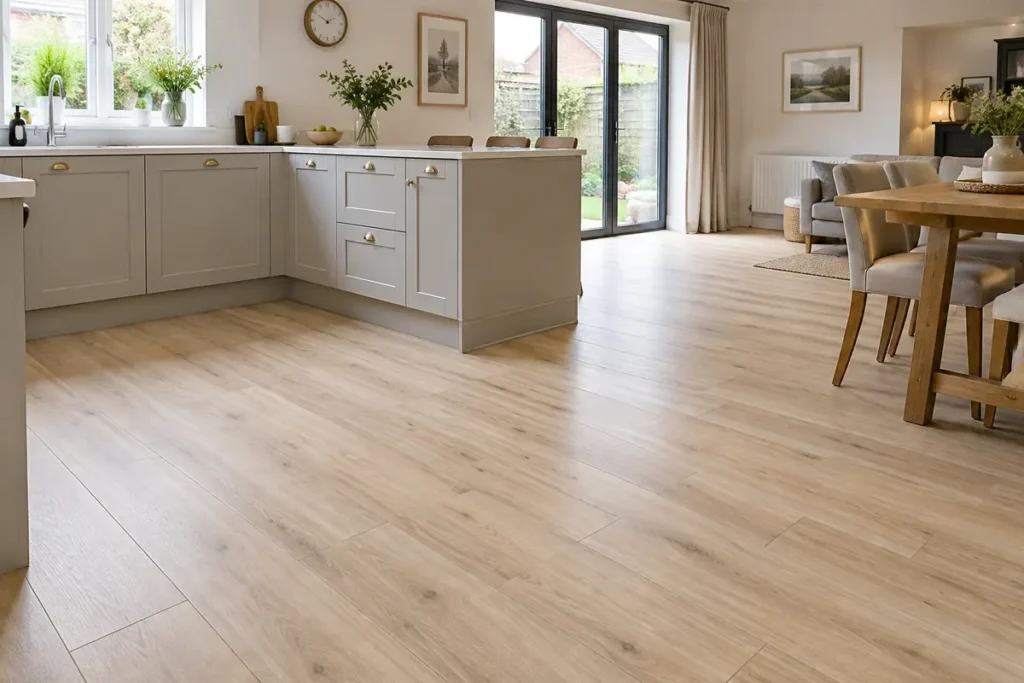
Vinyl flooring is easy to live with, but it is not indestructible. Too much water can reach seams and edges, harsh chemicals may alter the finish, and gritty dirt can leave fine scratches.
The safest way to clean vinyl flooring is simple: sweep or vacuum away loose grit, then damp-mop with a clean microfibre pad and a pH-neutral cleaner approved for vinyl. Wring the mop well, follow the cleaner’s dilution instructions and allow the floor to dry fully. Your flooring manufacturer’s care instructions always take priority because products and constructions vary.
Never assume a viral cleaning hack is suitable for your floor. Test any new product on a small, inconspicuous area first, and never mix cleaning chemicals.
Table of Contents
Quick comparison: which cleaning method should you use?
| Method | When to use it | Recommended tools | Important precautions |
| Routine cleaning | Weekly, or whenever dust and footprints are visible | Soft broom or hard-floor vacuum, well-wrung microfibre mop, manufacturer-approved pH-neutral cleaner | Vacuum first; use the stated dilution; leave no standing water |
| Deep cleaning | When routine mopping no longer removes ingrained grime | Two clean mop pads, soft-bristled brush for texture, approved vinyl cleaner, clean water | Work in small areas; do not flood seams; do not use a floor stripper unless specified by the manufacturer |
| Spot cleaning | Immediately after spills, sticky patches or small marks | White microfibre cloth, approved cleaner, clean damp cloth | Blot rather than spread; work from the edge towards the centre; test first |
| Stain removal | When a mark remains after normal cleaning | Manufacturer-approved stain remover and soft white cloth | Identify the stain; avoid solvents and abrasives unless the manufacturer expressly approves them; stop if colour transfers or the finish changes |
What type of vinyl flooring do you have?
Correct identification matters because the surface, joints and fitting method affect how the floor should be cleaned.
Sheet vinyl
Sheet vinyl comes in wide rolls and usually has few seams. It may tolerate damp cleaning well, but water can still travel under damaged edges, joins or tears. Older floors may also have a different finish from modern products.
Vinyl plank flooring
Vinyl planks imitate timber and have a joint around every piece. They may be glued down, loose-laid or installed as a click-together floating floor. Although the material is water-resistant, liquid left at click joints, perimeter gaps or a damaged plank may reach the subfloor.
Luxury vinyl tile (LVT)
LVT is supplied as tiles or planks with a decorative layer and protective wear surface. It may be glued down or click-fitted. Brand-specific finishes can require a particular maintainer or refresher, so check the product name, installation paperwork or retailer’s guidance.
If you cannot identify the floor, treat it cautiously: use minimal moisture, a neutral cleaner labelled for vinyl and no heat, polish or solvent. A flooring retailer may be able to identify it from a spare plank or product code.
What to use to clean vinyl floors
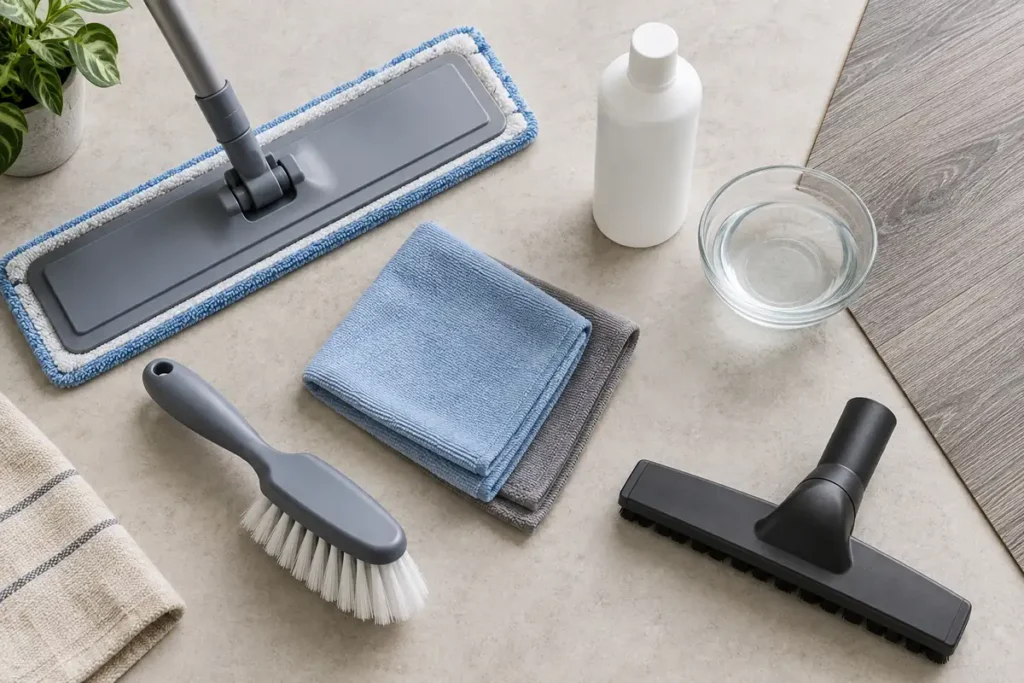
For most routine jobs, gather:
- a soft broom, dust mop or vacuum with a hard-floor setting and soft attachment
- a flat microfibre mop with clean, washable pads
- a pH-neutral cleaner explicitly approved for vinyl or your flooring brand
- a bucket of clean, lukewarm water, if the product requires dilution
- white microfibre cloths for spills and marks
- a soft-bristled hand brush for textured areas
- dry towels or a clean dry mop pad
The “best cleaner for vinyl floors” is not one universal recipe. It is the product approved by the flooring manufacturer, used at the correct concentration. For example, Karndean recommends its own cleaner or a pH-neutral cleaner approved for vinyl, while Amtico provides range-specific care products and dilution directions. See Karndean’s cleaning guidance and Amtico’s floor-care advice.
How often should vinyl flooring be cleaned?
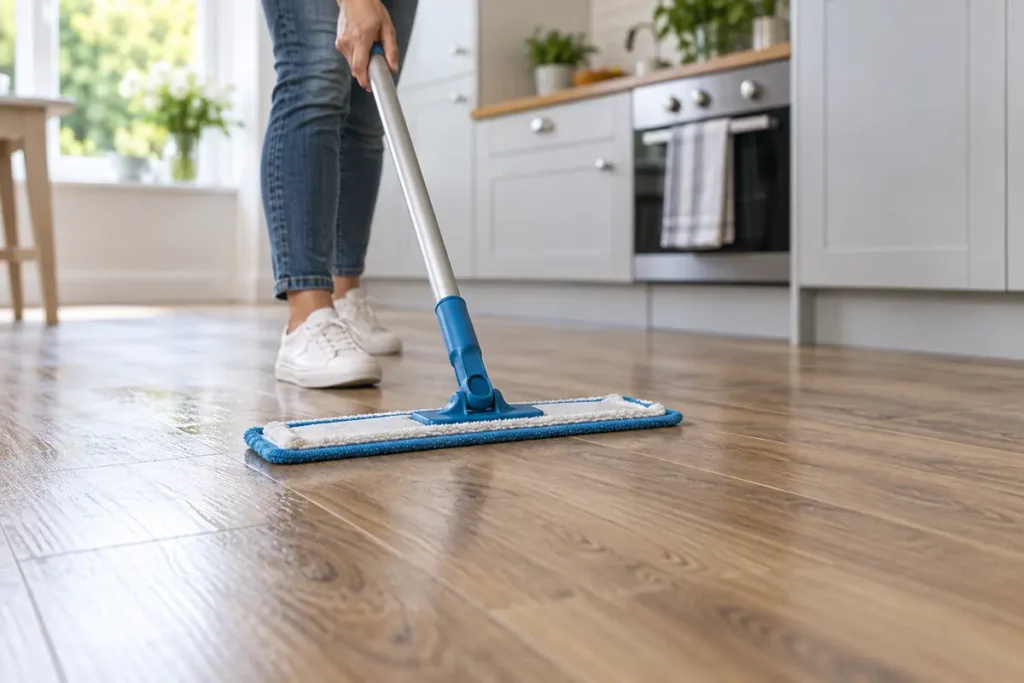
Remove visible crumbs, grit and tracked-in soil daily in busy kitchens, hallways and homes with pets. Less-used rooms may need this a few times a week.
Damp-mop approximately weekly, adjusting for traffic and spills. Deep-clean only when routine cleaning leaves ingrained soil—often every one to three months in a busy area rather than to a fixed timetable. Clean spills straight away, as a wet floor can be slippery and some substances can stain if left in place.
How to clean vinyl flooring step by step
1. Check the care instructions
Find the manufacturer, range and fitting type if possible. Confirm which cleaner is approved, whether rinsing is required and whether there are special restrictions. Read the cleaning-product label as well as the flooring guide.
2. Remove loose dirt
Move light furniture rather than dragging it. Sweep gently or vacuum using the hard-floor head. Switch off any rotating beater bar unless the vacuum manufacturer confirms it is safe for that surface. Pay attention to edges and beneath chairs, where grit accumulates.
3. Prepare the cleaner correctly
Dilute the approved cleaner exactly as directed. More detergent does not mean a cleaner floor; excess product can leave a dull or sticky film. Use lukewarm rather than very hot water unless the instructions say otherwise.
4. Damp-mop in small sections
Wring the microfibre pad until it is damp, not dripping. Mop systematically, changing the water or pad when it becomes dirty. On planks, following the direction of the grain makes it easier to see missed patches.
5. Remove residue if instructed
Some products are no-rinse; others require a pass with clean water. Follow the label. If the floor remains sticky or streaky, a clean, barely damp pad may lift leftover cleaner, but do not repeatedly soak the surface.
6. Let the floor dry
Keep people and pets off the area until it is dry. Wipe any moisture sitting at seams or edges with a dry cloth. Drying promptly reduces slip risk and discourages water from finding its way beneath the floor.
How to deep-clean vinyl flooring safely
Deep cleaning means a more thorough version of the routine process—not stronger chemicals or more water.
- Vacuum slowly in two directions, including edges and beneath movable furniture.
- Test the approved cleaner in a hidden spot and check it after drying.
- Apply the correctly diluted solution to a small section with a well-wrung mop.
- Allow only the contact time stated on the label; never let solution pool or dry onto the floor.
- Gently agitate stubborn textured areas with a soft-bristled brush. Do not scrub glossy areas aggressively.
- Lift the loosened soil with a clean mop pad rather than spreading dirty solution.
- Rinse only if directed, using a fresh, well-wrung pad.
- Dry the floor and inspect it in natural light.
If discolouration remains, it may be wear, UV change, chemical damage or staining beneath the wear layer rather than removable dirt. Repeated scrubbing could make it worse. Ask the manufacturer or a flooring professional before using any restorative treatment.
How to clean luxury vinyl flooring and vinyl planks
Cleaning LVT flooring and vinyl plank flooring follows the same gentle routine, with extra care around joints. Do not pour water directly onto the surface or allow it to sit between planks. Wipe spills promptly even when the product is described as waterproof; that description does not guarantee every perimeter, subfloor or installation detail is protected.
Glue-down LVT can be vulnerable to excessive heat or incompatible chemicals affecting the adhesive. Click LVT has many joints through which persistent moisture may travel. Newly installed floors may also have a waiting period before wet cleaning, so follow the installer’s handover information.
How to remove stains and marks from vinyl flooring
Act promptly and begin with the mildest approved method. Tarkett advises working from the outside of a stain towards its centre before wiping with fresh water; this helps avoid spreading the mark. Its broader cleaning advice covers both vinyl rolls and LVT: Tarkett vinyl-floor care.
Grease and food
Lift solids with a blunt plastic scraper held almost flat. Blot liquids, then use the manufacturer-approved neutral cleaner on a white cloth. Repeat gently rather than increasing the concentration. Remove cleaner residue as directed and dry the area.
Mud
Let thick mud dry if doing so will not set another stain, then vacuum the loose soil. Damp-clean the remaining mark. This prevents gritty mud being rubbed across the wear layer.
Scuffs
First try a clean damp microfibre cloth. On Karndean flooring, the manufacturer suggests buffing scuffs with a tennis ball, but do not treat this as universal advice: confirm it for your product and test discreetly first.
Sticky residue
Lay a clean, damp cloth over the spot briefly to soften water-soluble residue, then wipe without scraping. For adhesive, paint, ink or an unknown sticky substance, use only a stain remover expressly approved for that flooring. General-purpose solvents, acetone and sharp blades can permanently alter the surface.
Stubborn or coloured stains
Do not reach immediately for bleach, abrasive powder or baking soda. Photograph the mark, note what caused it and consult the manufacturer’s stain chart. Use a white cloth so you can see whether colour or finish is transferring. Stop if the area becomes dull, tacky or lighter.
How to clean textured vinyl flooring
Embossed grain can hold soil below the path of a flat mop. Vacuum first, then apply approved cleaner sparingly. Work a soft-bristled brush gently along the texture in a small section; hard bristles and drill brushes can scratch or polish the raised surface unevenly. Lift the dirty solution with a clean microfibre pad, rinse only if instructed and dry.
How to make vinyl floors look fresh without damaging the finish
A clean, residue-free floor usually looks better than one coated in polish. Use the right cleaner at the right dilution, change dirty mop water and finish with a clean pad. Do not try to create a high shine on a product designed to have a matt or low-sheen finish.
Wax, oil soap and generic “mop and shine” products can form a film and may make the floor slippery. Only use a refresher or dressing approved for the exact flooring range. Karndean, for example, offers a specific Remove and Refresh system for periodic care; that does not make it suitable for another brand.
Can you use vinegar on vinyl flooring?
Not universally. Some sources recommend heavily diluted vinegar, while some flooring suppliers advise against it. Acidity, concentration, frequency and the particular finish all matter. Unless your manufacturer expressly approves vinegar and gives a dilution, choose an approved pH-neutral vinyl cleaner instead. Never combine vinegar with bleach or another cleaning product.
Can you use bleach on vinyl flooring?
Do not use bleach as a routine vinyl-floor cleaner. Karndean warns that bleach-based detergents can cause discolouration or make its floors slippery. Other manufacturers may publish limited disinfection instructions for particular products, but those directions must be followed exactly. Never improvise a bleach solution and never mix it with acids, ammonia or any other cleaner. The UK Health and Safety Executive’s guidance is unequivocal: never mix cleaning substances.
Can you steam-clean vinyl flooring?
Assume no unless the flooring manufacturer explicitly says yes for your exact range. Heat and moisture may affect the surface, joints or adhesive. Karndean does not recommend steam mops, while Quick-Step permits controlled steam cleaning on certain specified vinyl ranges and forbids it on others. This manufacturer-to-manufacturer difference is why generic advice is unsafe. Check Karndean’s floor-care FAQ and Quick-Step’s steam-cleaning guidance for examples.
Cleaning products and tools to avoid
Unless your manufacturer specifically approves them, avoid:
- steam mops and steam cleaners
- bleach, ammonia and strong alkaline or acidic cleaners
- neat or strong vinegar solutions
- baking soda, scouring powders and abrasive cream cleaners
- wire wool, rough scouring pads, stiff brushes and drill brushes
- acetone, paint thinner and general-purpose solvents
- wax, oil soap and unapproved polishes
- vacuum beater bars or hard attachments that can scratch
- soaking string mops and excessive water
Never mix products. Keep cleaners in their original containers, follow label precautions and ventilate the room when directed.
Prevent scratches, discolouration and water damage
- Use effective entrance mats to catch grit, but check the floor maker’s guidance on backing materials; some rubber or PVC-backed mats can discolour vinyl.
- Fit suitable protective pads beneath furniture and keep them clean.
- Lift furniture rather than dragging it. Use appropriate load-spreading protection for heavy appliances.
- Wipe spills promptly, especially near joins, edges and damaged areas.
- Protect the floor from prolonged direct sunlight where the manufacturer recommends blinds or curtains.
- Keep pet claws trimmed and remove sharp debris quickly.
- Do not leave damp rugs, plant pots or leaking appliances on the floor.
If damaged flooring forms part of a wider repair or refurbishment project, One Call Home Services lists flooring within its building and property improvement services in London. Ask the team to confirm whether your particular job is within scope; the page does not advertise specialist vinyl-floor cleaning.
Common vinyl-floor cleaning mistakes
The most frequent mistakes are mopping before vacuuming, using too much detergent, flooding the floor, applying an unverified homemade mixture and trying to “restore” a matt finish with wax. Dirty mop water simply redistributes soil, while cleaner residue attracts new dirt and causes streaks.
Another mistake is assuming all vinyl is the same. Sheet vinyl, glue-down LVT and click planks share a resilient surface, but their seams, adhesives and care finishes differ. Keep the product details and warranty, and let those instructions overrule general online advice.
Frequently asked questions
What is the best way to clean vinyl flooring?
Vacuum or sweep away grit, then use a well-wrung microfibre mop and a correctly diluted pH-neutral cleaner approved by the flooring manufacturer. Remove residue if instructed and let the surface dry fully.
Can I use washing-up liquid on vinyl floors?
Only if the floor manufacturer approves it. Washing-up liquid is not formulated as a floor-care product and too much can leave a sticky film. A designated neutral vinyl cleaner is the safer default.
Why is my vinyl floor sticky after mopping?
The likely causes are too much detergent, an unsuitable product or dirty solution left on the floor. Check the care guide, then use a clean, barely damp microfibre pad to remove residue if the manufacturer permits. Avoid repeatedly soaking the floor.
How do I clean vinyl flooring without leaving streaks?
Remove dry dirt first, measure the cleaner accurately, use clean pads and change dirty water. Work in small sections and do not let cleaning solution dry on the surface. A final clean pad may be needed if the product requires rinsing.
Can a steam mop be used on luxury vinyl tile?
Only when the manufacturer approves steam for that exact LVT range and you follow its conditions. Many brands advise against it because heat and moisture may affect the finish, adhesive or joints.
How can I remove ingrained dirt from textured vinyl?
Apply an approved neutral cleaner sparingly, gently work it into the texture with a soft-bristled brush, then lift the dirty solution with a clean microfibre pad. Test first and avoid hard brushes or abrasive powders.
Is vinyl flooring waterproof?
The vinyl material may be sold as waterproof, but the complete installation is not automatically immune to water. Moisture can still enter damaged seams, click joints, edges or the subfloor, so wipe spills promptly and avoid flooding.
Need help maintaining your home?
For household repairs, refurbishment or wider property maintenance, contact One Call Home Services to discuss what support is available in your London area.

