
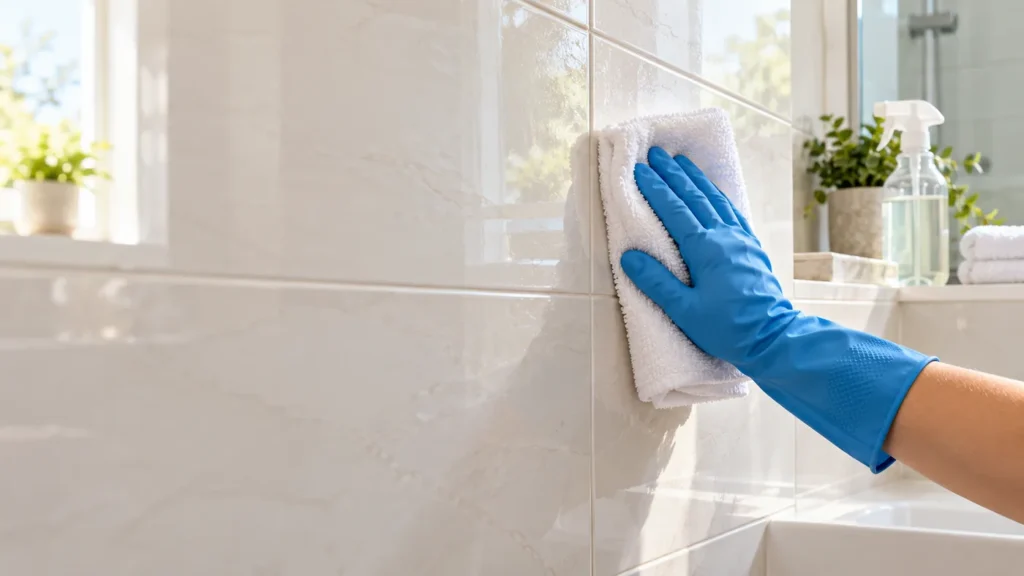
Short answer: To clean bathroom tiles, first check the tile maker’s care instructions and test your cleaner in a hidden spot. Remove loose dust, wash the tiles with a suitable cleaner and a soft cloth or mop, then rinse and dry them. Clean grout separately with a soft brush. For natural stone, including marble, choose a stone-safe, pH-neutral product rather than an acidic cleaner.
Bathroom tiles collect more than the dirt you can see. Water droplets dry into marks, soap leaves a film, and grime settles along grout lines and floor edges. A gentle, thorough clean usually works better than hard scrubbing with whatever product is nearest the sink.
The right method depends on the tile and grout you have. Start with the checks below, then follow the steps for the area you’re cleaning.
Table of Contents
Before you clean: check the material
Look for the manufacturer’s care instructions if you have them. Tiles that appear similar can have different surfaces or finishes, and grout and sealants may need their own care. If you do not know what your tiles are made from, start with a cleaner labelled for the material you can identify, and test it in an inconspicuous area. Stop if it changes the colour or finish.
Natural stone needs particular care. Acidic cleaners, including vinegar, can damage marble and other natural stone. Use a product labelled as stone-safe and pH-neutral, following its directions. Do not assume a cleaner suitable for ceramic or porcelain is suitable for stone.
Open a window or use the bathroom extractor fan while cleaning. Read the product label, including any instructions about dilution, contact time and rinsing. Never mix cleaning products. In particular, do not mix bleach with vinegar, ammonia or any other cleaner.
How to clean bathroom tiles step by step
For routine cleaning, gather a soft microfibre cloth or non-scratch sponge, a bucket, a soft brush for grout and a cleaner suitable for your tile. A mop with a washable head is useful for floors. Use separate clean water for rinsing.
- Clear the area. Move bottles, bath mats and other items. This lets you reach the tile edges and stops cleaner collecting beneath them.
- Remove loose dirt. Wipe wall tiles with a dry or lightly damp cloth. Sweep or vacuum floor tiles, including the corners, before washing. Loose grit can drag across a surface when you scrub.
- Apply the cleaner as directed. Work on a manageable section so the product does not dry on the tile. Use a soft cloth or sponge and give deposits a little time to loosen, within the label’s instructions.
- Wipe gently. Pay attention to areas around taps, the shower and the lower parts of walls where splashes collect. Use a soft brush along grout lines, without grinding into the grout.
- Rinse where required. Wipe away cleaner and loosened dirt with clean water, changing the water when it becomes cloudy. Check the product label for its rinsing instructions.
- Dry the surface. A clean, dry microfibre cloth helps prevent fresh water marks on walls. Let floors dry before replacing mats or walking on them.
If a mark remains, identify what it is before reaching for a stronger product. Soap scum, mineral deposits and staining in grout may need different approaches.
Cleaning bathroom wall tiles
Wall tiles around a bath or shower often have a dull film from soap and body-care products. Start at the top and work down so dirty water does not run over an area you have already cleaned. Apply a tile-appropriate cleaner to a cloth or sponge, wipe the surface, then rinse as directed and dry it.
For textured tiles, use a soft brush to reach shallow grooves. Keep pressure light. Around fixtures and sealant, use a cloth or soft brush rather than an abrasive pad that could scratch a finish or wear the sealant.
If you are cleaning above a bath, take care with your footing. A long-handled, soft cleaning tool may be easier to control than stretching to reach the top row.
Cleaning bathroom floor tiles
Floor tiles need the loose dust and hair removed first. Sweep or vacuum, especially along skirting, behind the toilet and around the bath. Then mop with a cleaner suitable for the floor tile, using only as much water as needed.
Work towards the door so you do not step on the wet floor. Give corners and grout lines attention with a soft brush, but avoid soaking the floor or leaving pools of cleaning solution at the edges. Rinse if the product calls for it, and allow the floor to dry fully. A mat put back onto damp tiles can trap moisture underneath.
If the floor still feels slippery or looks streaky after drying, there may be cleaner left on the surface. Wipe it again with clean water, provided the tile maker’s instructions allow it, and dry it.
How to clean bathroom tile grout
Grout is porous on many installations and can hold onto dirt even when the tile faces look clean. Treat it as a separate cleaning job.
First, check any care guidance for the grout and surrounding tile. Apply a suitable grout cleaner to a small section, following the label. Gently work along the line with a soft brush, then remove the loosened dirt and rinse as directed. Repeat in short sections rather than scrubbing one spot aggressively.
Avoid metal brushes and heavy pressure: both can damage grout. If a line remains dark after careful cleaning, do not keep scraping at it. Discolouration can be set into the grout, and cracked or missing grout needs repair rather than more cleaner. If you notice persistent dampness, loose tiles or failing sealant, deal with the source of the moisture as well as the visible mark.
Dealing with soap scum and stubborn marks
Soap scum: Use a cleaner labelled for soap residue and suitable for your tile. Apply it as directed, give it the stated time to work, then wipe with a non-scratch sponge. Rinse and dry. A second gentle pass is preferable to abrasive scrubbing.
Hard-water marks: These often appear as pale spots or a cloudy deposit where water repeatedly dries. Choose a product suitable for both the deposit and the tile. Some limescale removers are acidic, so check the label carefully and keep them away from natural stone unless the manufacturer explicitly says they are suitable.
Stubborn dirt at edges: Loosen it with a damp cloth and a suitable cleaner, then use a soft brush. If a mark sits in cracked grout or beneath damaged sealant, cleaning the surface may not resolve it.
Do not layer products to tackle a difficult patch. Rinse away one cleaner according to its label before considering a different approach.
What to avoid
- Vinegar or acidic descalers on natural stone. Marble and other stone can be damaged by acid.
- Mixing cleaners. Never mix bleach with vinegar, ammonia or other cleaning products.
- Abrasive pads, metal brushes or forceful scraping. These may scratch tiles or damage grout and sealant.
- Assuming one product suits every surface. Check the tile, grout and product instructions first.
- Leaving cleaner to dry on the surface. Work in small sections and follow the label’s contact-time and rinsing directions.
A simple routine to keep tiles cleaner
After a shower, remove water from accessible wall tiles with a squeegee or dry cloth, especially where marks usually appear. Keep the extractor fan running or the window open as appropriate for your bathroom, and let wet mats dry before putting them back.
Give frequently used tiles a gentle wipe as part of your regular bathroom clean. Sweep the floor before mopping, and look over grout and sealant while you work. Catching a small gap or persistent damp patch early is more useful than repeatedly cleaning over it.
Can I use washing-up liquid to clean bathroom tiles?
A small amount diluted in water may help with everyday grime on some tiles, but check the tile maker’s guidance first and test a hidden area. Rinse thoroughly: leftover soap can leave a film.
How do I clean bathroom tiles without leaving streaks?
Use the amount of cleaner directed on the label, rinse where required, and finish with a clean, dry microfibre cloth. Change dirty rinse water rather than spreading it back across the tiles.
Can I use vinegar on bathroom tiles?
Only if the tile and grout manufacturers permit it. Do not use vinegar on natural stone, including marble, because acid can damage it. A suitable pH-neutral cleaner is the safer choice for stone.
What is the best way to clean grout in a shower?
Use a cleaner suitable for the grout and adjacent tile, then gently work along the lines with a soft brush. Rinse as directed. If grout is cracked, missing or persistently discoloured, cleaning alone may not fix the problem.
How often should I clean bathroom tiles?
Wipe away standing water after use where practical, and include the tiles in your regular bathroom cleaning routine. Clean sooner when you notice a soap film, floor grime or marks building up.

